Batuk Bhairav Aarti: Lyrics, Meaning & Powerful Benefits
The Shree Batuk Bhairav Aarti (श्री बटुक भैरव आरती) is a powerful devotional hymn dedicated to the child form of Lord Bhairav, a fierce manifestation of Lord Shiva. According to the Shiva Purana, reciting this aarti invokes Bhairav's protective energies, shielding devotees from negative forces, unseen dangers, and the fear of untimely death. It's a core ritual for seeking courage and overcoming life's biggest obstacles.
Quick Answer
- What: A devotional hymn praising Batuk Bhairav, the child form of Lord Shiva's fierce manifestation.
- Why: Chanted for protection from evil, removal of obstacles, courage, and liberation from fear.
- When: Daily, but especially powerful on Sundays (Ravivar) and during Bhairav Ashtami.
- How to Participate: Participate in a Ravivar Visesh Batuk Bhairav Abhishek Seva at verified temples.
Table of Contents
- Shree Batuk Bhairav Aarti: Complete Lyrics
- Verse-by-Verse Meaning of the Aarti
- Who Is Batuk Bhairav?
- Powerful Benefits of Reciting This Aarti
- How to Perform the Batuk Bhairav Aarti: The Right Vidhi
- Participate in Batuk Bhairav Puja on Utsav
Shree Batuk Bhairav Aarti: Complete Lyrics
This is the complete text of the Shree Batuk Bhairav Aarti. Verified pandits recommend chanting it with a pure heart and focused mind to receive the full blessings of the deity.
Jai Bhairava Deva, Prabhu Jai Bhairava Deva,
Sura Nara Muni Saba, Karate Prabhu Tumhari Seva.
॥ Om Jai Bhairava Deva ॥Tuma Papa Uddharaka, Duhkha Sindhu Taraka,
Bhakton Ke Sukha Karaka, Bhishana Vapu Dharaka.
॥ Om Jai Bhairava Deva ॥Vahana Shvana Virajata, Kara Trishula Dhari,
Mahima Amita Tumhari, Jai Jai Bhayahari.
॥ Om Jai Bhairava Deva ॥Tuma Bina Shiva Seva, Saphala Nahin Hove,
Chaturvatika Dipaka, Darshana Duhkha Khove.
॥ Om Jai Bhairava Deva ॥Tela Chataki Dadhi Mishrita, Bhashabali Teri,
Kripa Kijiye Bhairava, Kariye Nahin Deri.
॥ Om Jai Bhairava Deva ॥Panvon Ghungharu Bajata, Damaru Damakavata,
Batukanatha Bana Balaka, Jana Mana Harashavata.
॥ Om Jai Bhairava Deva ॥Batukanatha Ki Aarti, Jo Koi Jana Gave,
Kahe Dharanidhara Vaha, Nara Manavanchhita Phala Pave.
॥ Om Jai Bhairava Deva ॥
Verse-by-Verse Meaning of the Aarti
Understanding the meaning behind the words deepens your connection during the prayer. Here's what each verse of the Batuk Bhairav Aarti truly signifies. It's not just about recitation; it's about feeling the essence of Bhairav's power.
Verse 1: Jai Bhairava Deva...
"Victory to you, Lord Bhairav! Gods, humans, and sages all serve you with devotion."
This opening verse establishes Bhairav's supreme status, acknowledged across all realms of existence.
Verse 2: Tuma Papa Uddharaka...
"You are the liberator from sins, the one who helps us cross the ocean of sorrow. You bring happiness to your devotees and possess a formidable form."
This highlights Bhairav's dual nature: terrifying to evil but a source of immense comfort and joy to his followers.
Verse 3: Vahana Shvana Virajata...
"You ride majestically upon your divine dog (Shvan), holding a trident (Trishul) in your hand. Your glory is infinite. Victory to you, the remover of all fear!"
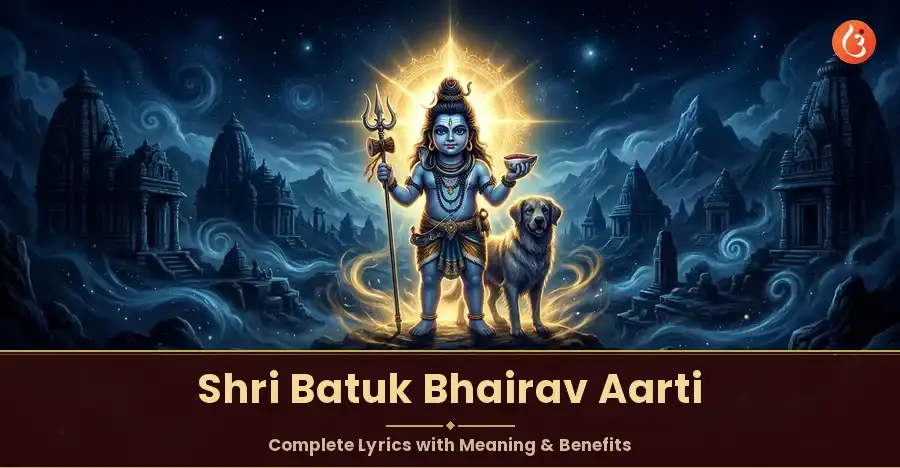
This describes his iconic imagery. The dog represents dharma and vigilance, while the trident signifies his control over the three Gunas. The dog is not merely a vehicle but a symbol of unwavering loyalty and righteousness. It represents the cosmic laws that Bhairav upholds, sniffing out adharma wherever it may hide.
Verse 4: Tuma Bina Shiva Seva...
"Without your blessing, service to Lord Shiva cannot be successful. You are the radiant lamp of the four directions, and your darshan (sight) removes all misery."
This is a key verse. According to Shaiva tradition, Bhairav is the Kshetrapal (guardian of the temple), and his permission is essential for reaching Shiva. This verse underscores his role as the supreme gatekeeper. In many ancient Shiva temples, such as the Kashi Vishwanath Temple, the darshan is considered incomplete without first paying homage to the Bhairav shrine. He holds the keys to Shiva's domain.
Verse 5: Tela Chataki Dadhi Mishrita...
"Offerings of oil, yogurt, and other items are made to you. Oh Bhairav, please bestow your grace upon us without any delay."
A direct appeal for blessings, referencing the traditional offerings (bhog) that please the deity.
Verse 6: Panvon Ghungharu Bajata...
"The bells on your feet jingle, and your damaru drum resonates. As Batukanath, the boy-lord, you delight the hearts of your people."
This verse specifically honors his child (Batuk) form—playful, yet immensely powerful.
Verse 7: Batukanatha Ki Aarti...
"Whoever sings this Aarti of Batukanath, says the poet Dharanidhara, that person will receive all their desired fruits (wishes)."
This is the Phala Shruti (statement of benefits), promising that sincere devotion through this aarti leads to the fulfillment of one's deepest wishes.
Who Is Batuk Bhairav?
Many devotees know Lord Bhairav as the fierce, wrathful form of Shiva, the one who punishes evil. But what about Batuk Bhairav? The Shiva Purana provides the context for his origin. Batuk Bhairav is the gentle, child (Batu) form of this mighty deity.
The story tells of a demon named Aapad, who received a boon making him invulnerable to any god, demon, or man. His only weakness was that he could be defeated by a five-year-old child. As Aapad's tyranny grew, the gods pleaded with Lord Shiva for help. To overcome the demon's boon, Shiva manifested his own divine energy into the form of Batuk Bhairav, a beautiful and powerful five-year-old boy. This child-form vanquished Aapad, earning the name "Apaduddharana," the remover of calamities.
Think of it this way: while Kaal Bhairav represents the fearsome power of time and destruction, Batuk Bhairav embodies protection and compassion. He is considered more accessible, especially for householders. His iconography reflects this blend of innocence and power. He is often shown with curly locks of hair, three eyes, and carrying a staff (danda) and a skull bowl (kapala). Worshipping him is believed to grant quick blessings and shield the family from harm, black magic, and negative planetary influences. He is the guardian who is both powerful and merciful. Absolutely essential.
You can learn more about Lord Shiva's different forms and their significance in our guide to the Twelve Jyotirlingas of Lord Shiva.
Powerful Benefits of Reciting This Aarti
Chanting the Batuk Bhairav Aarti isn't just a ritual; it's a spiritual tool for profound transformation. Devotees who perform it regularly, especially on Sundays, report significant changes. Why does this matter so much? Because it aligns you with the protective energies of the ultimate guardian.
- Protection from Negative Energies: The primary benefit, confirmed by countless scriptures, is the creation of a spiritual shield (kavach) around you and your home, warding off evil spirits, psychic attacks, and black magic.
- Overcoming Enemies & Legal Issues: Batuk Bhairav's energy is invoked to neutralize the ill intentions of hidden and open enemies. This protection extends to internal foes like greed and ego. His grace provides the clarity to see through deceit and is considered highly effective for resolving long-standing legal disputes in one's favor.
- Removal of Obstacles: The Aarti helps clear blockages in your personal and professional life, paving the way for success and growth. It dissolves inertia and brings momentum to stalled projects.
- Health and Well-being: It is believed to protect against diseases and promote a long, healthy life by removing the fear of untimely death (Akaal Mrityu). It is especially potent for mitigating the malefic effects of planets like Shani, Rahu, and Ketu, which can cause chronic illnesses and accidents.
- Courage and Fearlessness: Regular chanting instills immense courage, helping you face life's challenges without fear. It's a powerful remedy for anxiety, phobias, and unknown fears that hold you back.
- Prosperity and Success: By clearing negative energies that block financial flow, the Aarti attracts opportunities for growth. As the guardian, Lord Bhairav ensures that a devotee's honest efforts are protected and lead to both material and spiritual abundance.
How to Perform the Batuk Bhairav Aarti: The Right Vidhi
To get the maximum benefit, you should perform the Aarti with the correct procedure (vidhi). It’s simple, but your sincerity is what counts the most. Here’s a step-by-step guide from temple pandits.
- Purify Yourself: Take a bath and wear clean clothes. The traditional color associated with Bhairav is black or dark blue. It is ideal to face east or north while performing the puja.
- Prepare the Altar: Place an image or idol of Lord Batuk Bhairav on a clean cloth. Light a mustard oil lamp (diya) and incense sticks (agarbatti). The flame of the diya represents the divine light that dispels darkness and ignorance.
- Make Offerings: Offer flowers (preferably red hibiscus or oleander), sweets (like jaggery, ladoos, or imarti), and fruits. Some devotees also offer black urad dal, coconut, and mustard oil, which are particularly dear to him.
- Invoke the Deity: Before starting the Aarti, it is highly recommended to chant the Batuk Bhairav Mool Mantra at least 11 times to invoke his presence. A common mantra is: Om Hreem Batukaya Apaduddharanaya Kuru Kuru Batukaya Hreem Om Swaha. This helps focus the mind and sanctify the space.
- Chant the Aarti: Begin chanting the Aarti with a clear voice and deep devotion. You can ring a small bell while you sing. Focus your mind entirely on the deity, visualizing his protective form.
- Conclude with Prayer: After the Aarti, sit in silence for a few minutes and pray for Lord Bhairav's blessings. Ask for protection and guidance.
- Best Time: The most auspicious time is during the evening after sunset. Performing it on a Sunday is considered especially powerful for quick results.
Participate in Batuk Bhairav Puja on Utsav
While daily Aarti at home is powerful, participating in a formal puja conducted by verified pandits at a traditional temple can amplify the blessings. These rituals follow ancient protocols that unlock deeper spiritual benefits.
At Utsav, you can connect with these sacred traditions directly.
Recommended Pujas:
- Ravivar Visesh Weekly Chandan Abhishek Seva: Participate in a special sandalwood paste abhishekam performed every Sunday at the Baba Batuk Bhairav Mandir in Ujjain. Dakshina starts from ₹151.
- Monthly Chandan Abhishek Seva: Book a monthly service for continuous blessings and protection for your family.
- Maa Chinnamasta Batuk Bhairav Tantrik Havan: For devotees seeking powerful remedies for severe obstacles, this Tantrik Havan offers an intensive spiritual solution.
When you participate, pandits will chant your Name and Gotra in the Sankalp, ensuring the blessings are directed to you. You'll receive a video of the puja and authentic prasad delivered to your home.
Scripture Composer/History
The Shree Batuk Bhairav Aarti is attributed to the poet Dharanidhara, whose name is explicitly mentioned in the final verse (phala shruti): Kahe Dharanidhara Vaha, Nara Manavanchhita Phala Pave. While detailed historical records of Dharanidhara are scarce, he is placed within the medieval Bhakti tradition. The composition is not part of an ancient Purana but is a standalone devotional hymn written in a vernacular Hindi dialect, likely Brajbhasha, which was common for such works. Its theology is deeply rooted in the Puranic descriptions of Bhairav found in texts like the Shiva Purana. For centuries, this aarti has been transmitted through oral tradition among devotees and later preserved in popular prayer booklets (aarti sangrahs), becoming an integral part of Bhairav worship.
Sources & References
Scriptural Authority:
- Shiva Purana, Rudra Samhita - Describes the origins and manifestations of Lord Bhairav.
- Shaiva Agamas - Texts detailing the worship, mantras, and rituals associated with Bhairav.
Temple Verification:
- Baba Batuk Bhairav Mandir, Ujjain - Ritual practices and timings for the pujas mentioned are verified with this temple.
Related Pujas on Utsav:
- Ravivar Visesh Weekly Batuk Bhairav Chandan Abhishek Seva
- For more Stotras and their benefits, explore our guide on the Dwadash Jyotirlinga Stotram.