Gopal Aarti: Complete Lyrics, Meaning & Benefits (2026 Guide)
Gopal Aarti (गोपाल आरती), most famously known as "Aarti Yugal Kishore Ki Kijai," is a devotional hymn that celebrates the divine, inseparable love of Radha and Krishna. This Aarti isn't just a ritual; it's a deep meditation on their united form. According to the Pushtimarg tradition founded by Vallabhacharya, chanting this Aarti dissolves ego and immerses the devotee in madhurya bhava—the sweet, profound emotion of divine love.
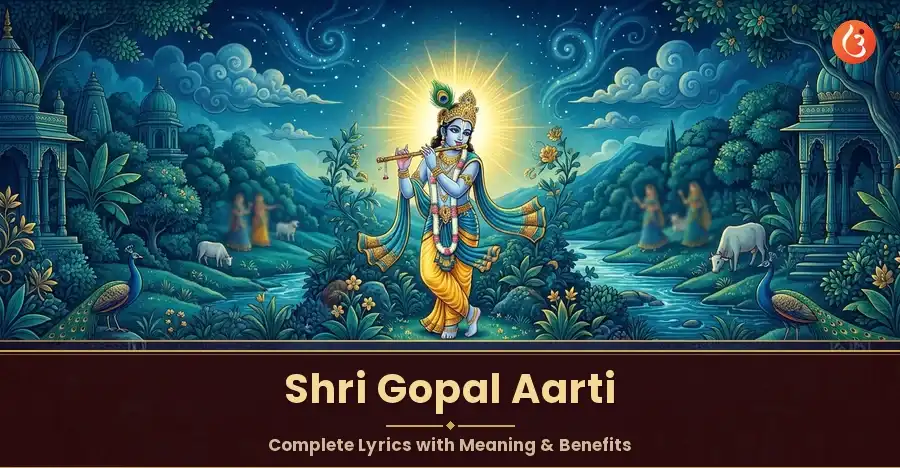
Quick Answer: Gopal Aarti
- What: A devotional hymn, "Aarti Yugal Kishore Ki Kijai" (आरती युगल किशोर की कीजै), celebrating the divine love of Radha and Krishna.
- When: Best performed during twilight (Sandhya Kaal) daily, and on special occasions like Janmashtami and Radha Ashtami.
- Why: To invoke blessings for devotion, inner peace, and to experience the blissful union of the divine couple.
- How: Performed with a lit lamp (diya), incense, and flowers before an image of Radha-Krishna.
Table of Contents
- Aarti Yugal Kishore Ki Kijai — Complete Lyrics in English
- Verse-by-Verse Meaning of Gopal Aarti
- Who Composed the Gopal Aarti? The Pushtimarg Tradition
- What Are the Benefits of Chanting Gopal Aarti?
- How to Perform Gopal Aarti: The Complete Vidhi
- When Is the Best Time to Chant Gopal Aarti in 2026?
- Who are Radha and Krishna (Yugal Kishore)?
- Sources & References
Aarti Yugal Kishore Ki Kijai — Complete Lyrics in English
This traditional Aarti is a cornerstone of daily worship in many Vaishnava homes. Recite these verses with a pure heart to feel the divine presence of Radha and Krishna.
आरती युगल किशोर की कीजै ।
तन मन धन न्योछावर कीजै ॥गौरश्याम मुख निरखन लीजै ।
हरि का रूप नयन भरि पीजै ॥
Aarti Yugal kishor Ki Kije,
Tan Man Dhan Nayochawar Kije ॥
Gorshyam Mukh Nirkhan Lijiye,
Hari Ka Rup Nayan Bhari Pijiye ॥
Ravi Shashi Koti Badan Ki Shobha,
Tahi Nirkhi Mero Mann Lobha ॥
Odhe Neel Peet Pat Sari,
Kunjbihari Girivardhari ॥
Fulan Sej Phul Ki Mala,
Ratan Singhasan Baatai Nandlal ॥
Kanchan Thar Kapoor Ki Baati,
Hari Aae Nirmal Bhai Chati ॥
Sri Purushotam Girivardhari,
Aarti Kare Sakal Nar Nari ॥
Nandnandan Brijbhan Kishori,
Parmanand Swami Avichal Jori ॥
Verse-by-Verse Meaning of Gopal Aarti
Understanding the meaning transforms the ritual from simple recitation to heartfelt prayer. The language, rooted in Braj Bhasha, is filled with devotion and beautiful imagery. Here's what it all means.
Verse 1: Aarti Yugal kishor Ki Kije, Tan Man Dhan Nayochawar Kije
Let us perform the Aarti of the divine young couple (Radha and Krishna). Let's offer our body, mind, and wealth completely to them. This isn't a transaction; it's an act of total surrender.
Verse 2: Gorshyam Mukh Nirkhan Lijiye, Hari Ka Rup Nayan Bhari Pijiye
Gaze upon their beautiful faces—Radha, fair as gold (Gor), and Krishna, dark as a cloud (Shyam). Drink in the divine form of Hari (Krishna) with your eyes until your soul is satisfied.
Verse 3: Ravi Shashi Koti Badan Ki Shobha, Tahi Nirkhi Mero Mann Lobha
The splendor of their forms surpasses that of millions of suns (Ravi) and moons (Shashi). Beholding this beauty, my mind is captivated and filled with longing.
Verse 4: Odhe Neel Peet Pat Sari, Kunjbihari Girivardhari
She is draped in a blue saree, and He in a yellow (Peet) garment. They are the wanderers of the groves (Kunjbihari) and the one who lifted a mountain (Girivardhari).
Verse 5: Fulan Sej Phul Ki Mala, Ratan Singhasan Baatai Nandlal
Their bed is of flowers, and they wear floral garlands. Nandlal (Krishna, the son of Nanda) is seated on a jeweled (Ratan) throne.
Verse 6: Kanchan Thar Kapoor Ki Baati, Hari Aae Nirmal Bhai Chati
The camphor flame burns in a golden (Kanchan) plate for the Aarti. With the arrival of Hari, my heart has become pure and serene.
Verse 7: Sri Purushotam Girivardhari, Aarti Kare Sakal Nar Nari
All men and women perform the Aarti of Sri Purushottam (the Supreme Being), the lifter of the Govardhan Hill.
Verse 8: Nandnandan Brijbhan Kishori, Parmanand Swami Avichal Jori
The son of Nanda (Krishna) and the daughter of Vrishabhanu (Radha)—this eternal, unshakeable couple (Avichal Jori) is the lord of Parmanand (a poet-saint, signifying ultimate bliss).
Who Composed the Gopal Aarti? The Pushtimarg Tradition
While this Aarti is often described as traditional, its philosophical roots are deeply embedded in the Pushtimarg (Path of Grace) tradition, founded by the 16th-century saint Vallabhacharya. This school of thought emphasizes pure, selfless devotion (bhakti) to Krishna, and the Aarti perfectly captures this sentiment.
Pushtimarg philosophy is rooted in Shuddha Advaita (Pure Non-dualism), where the world and the individual soul are seen as real and one with Brahman (Krishna). The Aarti is a form of seva (devotional service), a central practice in this path. By performing it, the devotee doesn't just ask for blessings but actively participates in the divine leela, serving the divine couple in their home.
The themes and imagery are drawn directly from sacred texts like the Bhagavata Purana (श्रीमद्भागवतपुराणम्), which lovingly details Krishna's divine plays (leelas). The Aarti focuses on the Yugal Swaroop—the inseparable oneness of Radha and Krishna. It's not just about worshipping a deity; it's about celebrating the highest form of divine love, a concept central to the Pushtimarg philosophy. So, while a single author isn't named, its origin lies in a rich, devotional tradition that has shaped Krishna bhakti for centuries.
What Are the Benefits of Chanting Gopal Aarti?
According to Bhakti tradition scholars, regularly performing the Gopal Aarti with devotion brings profound spiritual and emotional benefits. It’s more than just a ritual; it’s a tool for inner transformation. Why does this matter so much? Because it aligns your consciousness with divine love.
- Deepens Devotion (Bhakti): The primary benefit is the cultivation of pure love for Radha and Krishna. It helps you move from ritualistic worship to a heartfelt, personal connection.
- Fosters Inner Peace: The act of focusing on the divine forms, the light of the diya, and the sacred sounds of the hymn calms the mind and reduces anxiety. It creates a sanctuary of peace in your daily life.
- Invokes Divine Blessings: By offering your love and surrender, you open yourself to the grace of the divine couple. Devotees believe this brings harmony, joy, and protection to their homes and families.
- Purifies the Atmosphere: The vibrations from the chanting, the aroma of incense, and the light from the camphor are believed to purify the energy of the space, removing negativity.
- Reduces Ego and Pride: The opening verse, "Tan Man Dhan Nayochawar Kije" (Offer your body, mind, and wealth), is a direct call for surrender. Regularly chanting this line with understanding helps dissolve the ego, fostering humility and a state of selfless service.
- Strengthens Relationships: Meditating on the perfect love of Radha and Krishna can inspire harmony and understanding in your own relationships. Their divine bond serves as the ultimate ideal. You can learn more about different forms of worship by reading about the Shree Banke Bihari Aarti.
How to Perform Gopal Aarti: The Complete Vidhi
Performing the Aarti is simple, and you don't need elaborate preparations. What's essential is a clean space and a focused mind. Here’s a step-by-step guide based on traditional practice.
- Preparation (Shuddhi): Begin by taking a bath and wearing clean clothes. Clean the puja area or the space where you'll perform the Aarti. It's all about creating a sacred atmosphere.
- Setup: Place an image or idol of Radha and Krishna before you. Light a ghee or camphor lamp (diya). You can also light incense sticks (agarbatti) and offer fresh flowers.
- Invocation (Avahana): Close your eyes for a moment and sincerely invite Radha and Krishna into your heart and home. You can chant a simple mantra like "Om Kleem Krishnaya Namah" three times.
- The Aarti Ritual: Stand up, take the lit lamp in your right hand, and wave it in a gentle, circular clockwise motion in front of the deity. Ring a small bell with your left hand if you have one. Sing the Aarti with devotion and focus.
- Offering (Naivedya): After the Aarti, it's traditional to offer something sweet, like mishri (rock sugar), butter, or fruits.
- Conclusion: After waving the lamp, cup your hands over the flame (carefully!) and bring them to your eyes and the top of your head to receive the blessings. Distribute the offered prasad to your family.
When Is the Best Time to Chant Gopal Aarti in 2026?
According to pandits, while any time is good for remembering the divine, certain timings amplify the spiritual benefits of the Gopal Aarti. Consistency is key.
The best time for daily recitation is during Sandhya Kaal—the twilight hours of morning and evening. These transitional moments are believed to be when the veil between the material and spiritual worlds is thinnest, making prayer more potent. This is considered a spiritually charged time of day. However, special festivals dedicated to Krishna and Radha are incredibly auspicious for this Aarti.
Occasion | Tentative 2026 Date | Significance for Devotees |
|---|---|---|
Krishna Janmashtami | Celebrating Lord Krishna's birth. Chanting the Aarti on this night is especially powerful. | |
Radha Ashtami | Celebrating Radha's appearance day. Performing the Aarti honors the divine couple together. | |
Govardhan Puja | The Aarti praises Krishna as "Girivardhari" (lifter of the mountain), making this day highly relevant. | |
Ekadashi Tithis | Monthly | These days are sacred to Lord Vishnu (and thus Krishna). Chanting brings immense spiritual merit. |
Note: Please check the Utsav Panchang for exact dates, as they depend on lunar calculations.
Who are Radha and Krishna (Yugal Kishore)?
The term "Yugal Kishore" refers to the eternal, youthful divine couple—Radha and Krishna. They are not two separate entities but two aspects of a single divine reality. Krishna is the Supreme Being, the energetic source of all creation, while Radha is His Hladini Shakti—His internal, blissful, divine energy.
This Hladini Shakti is not merely an attribute but the very essence of His capacity to experience and bestow divine bliss. In essence, Krishna is the embodiment of beauty and love (rasa), while Radha is the ultimate experiencer and bestower of that love. Their divine play (leela) is incomplete without this dynamic interplay.
As detailed in texts like the Garga Samhita, one cannot be understood without the other. Radha is the ultimate devotee, and Krishna is the ultimate object of devotion. Her love is the force that reveals His sweetest, most intimate nature. Chanting the Gopal Aarti is a way to worship this complete, non-dual truth. For a deeper dive into Krishna's divine attributes, you might find learning about the five favourite weapons of Lord Krishna insightful. You can explore another beautiful hymn with the Shree Krishna Aarti in Hindi.
Sources & References
Scriptural Authority:
* Bhagavata Purana: Provides the philosophical and narrative basis for Krishna's leelas and the concept of Bhakti.
* Garga Samhita: Details the divine love story of Radha and Krishna in Braj.
Tradition & Composer Authority:
* Pushtimarg Tradition: The school of thought founded by Vallabhacharya, which is the cultural and spiritual origin of this Aarti.
Panchang & Dates:
* Dates for 2026 festivals are referenced from the Utsav Panchang.