Shiva Aarti Lyrics, Meaning & Benefits
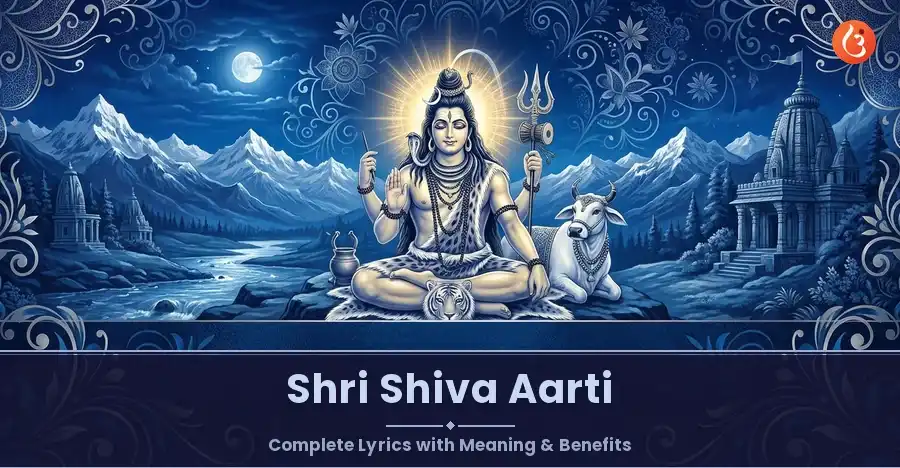
"Om Jai Shiv Omkara" (ॐ जय शिव ओंकारा) is the quintessential Aarti of Lord Shiva, sung to invoke his divine presence and seek blessings for spiritual liberation. According to the Skanda Purana, offering light (Aarti) to Mahadev dissolves negative karma. This hymn, composed by Pandit Shraddha Ram Phillauri, aligns the devotee’s heart with Shiva's cosmic energy.
TL;DR: Key Facts about Shiva Aarti
* What: "Om Jai Shiv Omkara" is a devotional hymn praising Lord Shiva's divine attributes and cosmic role.
* Composer: Traditionally attributed to Pandit Shraddha Ram Phillauri in the 19th century.
* Why Recite: To express devotion, remove obstacles, attain inner peace, and seek Shiva's grace for moksha (liberation).
* How to Participate: You can participate in special Shiva pujas performed by verified pandits at sacred temples through Utsav.
Table of Contents
- The History of 'Om Jai Shiv Omkara'
- Om Jai Shiv Omkara: Complete Aarti Lyrics
- Verse-by-Verse Meaning of the Shiva Aarti
- What Are the Benefits of Singing Shiva Aarti?
- When Should You Recite the Shiva Aarti? (2026 Timings)
- How to Perform Shiva Aarti: The Correct Vidhi
- Participate in Shiva Pujas on Utsav
- Sources & References
The History of 'Om Jai Shiv Omkara'
The beautiful and universally chanted "Om Jai Shiv Omkara" Aarti is a relatively modern composition, but its soul is ancient. It's traditionally attributed to Pandit Shraddha Ram Phillauri, a notable Hindu missionary, social reformer, and writer from the 19th century. Born in Punjab, he was a key figure in the revival and articulation of Sanatana Dharma during a period of significant cultural change.
What makes it so special? It captures the complex essence of Lord Shiva described in ancient texts like the Shiva Purana. The Aarti distills profound Puranic concepts—Shiva as the supreme ascetic, the perfect householder, the cosmic dancer, and the destroyer of evil—into simple, heartfelt verses. Its accessible language was revolutionary, bringing the lofty philosophy of Shaivism directly to the common devotee. It’s not just a song; it’s a summary of Shaivite philosophy made accessible for every devotee, a hallmark of the Bhakti tradition.
ॐ जय शिव ओंकारा, स्वामी जय शिव ओंकारा।
ब्रह्मा, विष्णु, सदाशिव, अर्द्धांगी धारा॥
ॐ जय शिव ओंकारा॥
Om Jai Shiv Omkara: Complete Aarti Lyrics
Verse 1
Om Jai Shiv Omkara, Swami Jai Shiv Omkara।
Brahma, Vishnu, Sadashiv, Ardhangi Dhara॥
Om Jai Shiv Omkara॥
Verse 2
Ekanan Chaturanan Panchanan Raje।
Hansanan, Garudasan Vrishvahan Saje॥
Om Jai Shiv Omkara॥
Verse 3
Do Bhuj, Chaar Chaturbhuj Dashabhuj Ati Sohe।
Trigun Roop Nirakhate Tribhuvan Jan Mohe॥
Om Jai Shiv Omkara॥
Verse 4
Akshamala Vanamala Mundamala Dhari।
Tripurari Kansari Kar Mala Dhari॥
Om Jai Shiv Omkara॥
Verse 5
Shvetambar Pitambar Baaghambar Ange।
Sankadik Garunadik Bhootadik Sange॥
Om Jai Shiv Omkara॥
Verse 6
Kar Ke Madhya Kamandalu Chakra Trishuldhari।
Sukhakari Dukhahari Jagpalan Kari॥
Om Jai Shiv Omkara॥
Verse 7
Brahma Vishnu Sadashiv Janat Aviveka।
Pranavakshar Ke Madhye Yeh Teeno Eka॥
Om Jai Shiv Omkara॥
Verse 8
Trigun Swami Ki Aarti Jo Koi Nar Gave।
Kahat Shivanand Swami Manvanchhit Phal Pave॥
Om Jai Shiv Omkara॥
Verse-by-Verse Meaning of the Shiva Aarti
Understanding the meaning transforms the Aarti from a ritual into a deep meditative experience. Here's what each verse signifies, drawing from the descriptions found in the Puranas.
- Verse 1: "Victory to you, Lord Shiva, the embodiment of Omkara! You are the one in whom Brahma, Vishnu, and Sadashiv reside, with your consort Parvati as half of your form (Ardhangini)." This establishes Shiva's supreme and all-encompassing nature.
- Verse 2: "You manifest with one, four, and five faces. While Brahma is seated on a swan and Vishnu on Garuda, you gracefully ride Nandi, the bull." This highlights Shiva's unique iconography among the trinity. The five faces, or Panchamukha, represent his five aspects: Sadyojata, Vamadeva, Aghora, Tatpurusha, and Ishana.
- Verse 3: "You appear with two, four, and ten arms, captivating the three worlds. The beings of the three realms are mesmerized by your divine form." A celebration of his cosmic, multifaceted form.
- Verse 4: "You wear garlands of Rudraksha beads, forest flowers, and skulls. You are the destroyer of the three demon cities (Tripurari) and the slayer of Kansa." This verse praises his power over evil.
- Verse 5: "You are adorned with white and yellow silks and a tiger skin. You are always accompanied by sages, divine beings, and celestial attendants." It paints a vivid picture of his divine court.
- Verse 6: "In your hands, you hold a water pot (Kamandalu), a discus (Chakra), and a trident (Trishul). You are the bestower of happiness, remover of sorrow, and protector of the world." This speaks to his role as a compassionate guardian.
- Verse 7: "The ignorant see Brahma, Vishnu, and Sadashiv as separate. But within the sacred syllable 'Om,' all three are one." This is a core Advaita Vedanta concept—the unity of the divine.
- Verse 8: "Whoever sings this Aarti of the Lord of the three Gunas (qualities) with devotion, says Swami Shivanand, will have all their desires fulfilled." The Phala Shruti, or the verse describing the fruits of the prayer.
What Are the Benefits of Singing Shiva Aarti?
Reciting the Shiva Aarti isn't just a tradition; it's a powerful spiritual practice with tangible benefits rooted in Vedic principles. The sound vibrations of the mantras calm the mind and purify the environment. You don't just sing it; you feel it.
- Promotes Inner Peace and Reduces Anxiety: The rhythmic chanting, as described in the Sama Veda's principles of sound, directly impacts the mind's frequencies, creating a state of calm and reducing mental chatter. It’s an instant spiritual reset.
- Removes Obstacles and Negative Energies: Lord Shiva is Vighnaharta (remover of obstacles). Singing the Aarti creates a protective shield of positive energy, dispelling fear, negativity, and hurdles from one's path. As Bholenath, he is easily pleased by sincere devotion.
- Deepens Devotion and Connection: It’s a direct line to the divine. The practice strengthens your bhakti (devotion) and helps you feel a personal connection to Mahadev's compassionate energy.
- Grants Blessings for Health and Well-being: As the "Sukhakari" (bestower of happiness) and "Dukhahari" (remover of sorrow), Shiva's grace, invoked through the Aarti, is believed to promote physical and mental well-being. Many devotees find solace during difficult times by chanting it. To learn about his powerful forms, you can read our guide on the Twelve Jyotirlingas of Lord Shiva.
- Aids in Spiritual Liberation (Moksha): The ultimate goal in Sanatana Dharma is moksha. The Aarti realigns the devotee's consciousness with the supreme reality that Shiva represents, clearing the path of karma and ego that obstructs liberation.
When Should You Recite the Shiva Aarti? (2026 Timings)
While you can recite the Aarti anytime your heart calls for it, certain periods are considered especially auspicious according to the Panchang, amplifying its spiritual impact.
- Daily Puja: It's traditionally performed during morning and evening pujas. The evening (Sandhya Kaal) is particularly significant as it marks the transition from day to night, a liminal space potent with spiritual energy.
- Mondays (Somvar): Monday is Lord Shiva's day. Performing the Aarti on this day is a beautiful way to start the week with divine blessings.
- Pradosh Vrat: This fast is observed twice a month on the Trayodashi tithi (13th day of the lunar cycle). The puja and Aarti are performed during the twilight period, which is considered a highly potent time for Shiva worship. This period, known as Pradosh Kaal, is believed to be when Lord Shiva is in his most blissful state, performing the cosmic dance, the Ananda Tandava. Worshipping him at this time is considered exceptionally fruitful.
- Maha Shivaratri: The Great Night of Shiva. The Aarti is a central part of the night-long pujas and celebrations, marking the peak of devotion for the year.
- Shravan Maas: The entire month of Shravan is dedicated to Lord Shiva. Chanting the Aarti daily during this holy month is believed to yield immense merit. This month is sacred because it is when the Samudra Manthan (churning of the ocean) took place, and Lord Shiva consumed the deadly Halahala poison to save the universe. Offering prayers during this month is an expression of gratitude for his sacrifice. Explore the power of another great hymn in our article on the Dwadash Jyotirlinga Stotram.
How to Perform Shiva Aarti: The Correct Vidhi
Performing the Aarti correctly enhances its devotional power. Here’s a simple, authentic method (vidhi) that you can follow at home, as practiced in temples across India.
- Preparation: Begin by taking a bath and wearing clean clothes. Maintain a clean and serene space for the puja. It's about creating a sacred atmosphere. Mental purity (Shuddhi) is as important as physical cleanliness; approach the ritual with a clear and humble mind.
- Lighting the Lamp: Light a ghee or camphor lamp. The lamp for Aarti typically has one, three, five, or seven wicks. Ghee symbolizes purity and offering one's soul, while camphor represents burning away the ego without leaving a residue.
- The Ritual: Stand before the idol or image of Lord Shiva. Ring a small bell with your left hand while gracefully circling the lamp in a clockwise direction with your right hand. The sound of the bell dispels negative energies and focuses the mind. Feel the energy.
- Chanting: Sing "Om Jai Shiv Omkara" with heartfelt devotion. Your focus and sincerity are more important than perfect pitch. Let the words flow from your heart.
- Conclusion: After the Aarti, sprinkle the water from the conch (if used) and then cup your hands over the flame and touch them to your eyes and head to receive the divine blessings. It is customary to then chant the Karpura Gauram mantra to complete the ritual:
> Karpura Gauram Karunavataram,
> Sansara Saram Bhujagendra Haram.
> Sada Vasantam Hridayaaravinde,
> Bhavam Bhavani Sahitam Namami.
(I bow to that Shiva who is as white as camphor, the incarnation of compassion, the essence of the world, who wears the king of snakes as a garland, ever-dwelling in the lotus of my heart, together with Bhavani (Parvati).)
Participate in Shiva Pujas on Utsav
For a deeper spiritual experience, you can connect with verified pandits performing authentic rituals at sacred temples. Utsav makes this possible for every devotee, no matter where you are.
Recommended Pujas:
* Somvar Vishesh Rin Mukteshwar Mahadev Weekly Daan Seva: Participate in this special Monday Daan Seva to seek blessings for relief from debts and life's burdens. Dakshina starts from a nominal amount.
When you participate, pandits perform the ritual chanting your name and gotra. You receive a video of the puja and authentic prasad delivered right to your home.
Scripture Composer/History
The popular Aarti "Om Jai Shiv Omkara" is attributed to Pandit Shraddha Ram Phillauri, a significant 19th-century Sanatana Dharma scholar, social reformer, and writer from Punjab. Composed around 1870, the hymn is written in a devotional vernacular Hindi, making profound theological concepts accessible to the common devotee. Unlike ancient stotras derived from a single scripture like a Purana or Samhita, this Aarti is a Bhakti tradition composition. It masterfully synthesizes key attributes of Lord Shiva as described across various Puranas, including the Shiva Purana and Skanda Purana. Transmitted orally and through widely circulated prayer books, it quickly became a foundational part of daily worship in temples and households.
Sources & References
- Scriptural Authority: The iconographic and philosophical descriptions in the Aarti are consistent with narratives found in the Shiva Purana and Skanda Purana.
- Composition: The Aarti is widely attributed to Pandit Shraddha Ram Phillauri (19th Century).
- Panchang & Dates: Festival and tithi timings for 2026 are referenced from verified Panchang calculations.
- Related Pujas on Utsav: All puja services mentioned are performed at verified temples by experienced pandits.