Shani Dev Aarti : Complete Lyrics, Meaning & Benefits
The Shani Dev Aarti (शनि देव आरती) is a powerful devotional hymn sung to honor Lord Shani, the dispenser of karmic justice. Reciting it, especially on Saturdays, is believed to mitigate the malefic effects of Saturn during periods like Sade Sati and align you with cosmic discipline. According to Jyotish tradition, this aarti helps cultivate patience and inner strength.
Quick Answer
- What: A devotional hymn praising Lord Shani, the deity governing the planet Saturn and karmic consequences.
- When: Most effective on Saturday evenings during Pradosh Kaal (just after sunset).
- Why: To seek protection from Saturn's challenging influences, reduce karmic burdens, and foster discipline.
- How to Participate: You can Participate in a Shani Mool Mantra Jaap & Tel Abhishek at verified temples with Dakshina from ₹501.
Table of Contents
- Shani Dev Aarti — Complete Lyrics in English
- Meaning of the Shani Aarti — Verse by Verse
- Why Should You Chant the Shani Aarti? (Key Benefits)
- How to Recite the Shani Aarti: The Complete Vidhi
- When Is the Best Time to Chant? (Auspicious Days 2026)
- Participate in Shani Puja on Utsav
- Sources & References
Shani Dev Aarti — Complete Lyrics in English
This Aarti is traditionally sung to invoke the blessings of Lord Shani. Here is the complete text in Roman English for easy recitation.
Stanza 1
Jai Jai Shri Shanidev Bhaktan Hitakari,
Suraj Ke Putra Prabhu Chhaya Mahatari.
Jai Jai Shri Shanidev Bhaktan Hitakari.
Stanza 2
Shyam Ang Vakra-Drishti Chaturbhuja Dhaari,
Nilambar Dhaar Nath Gaj Ki Asawari.
Jai Jai Shri Shanidev Bhaktan Hitakari.
Stanza 3
Kreet Mukut Shish Sahaj Dipat Hai Lilari,
Muktan Ki Maal Gale Shobhit Balihari.
Jai Jai Shri Shanidev Bhaktan Hitakari.
Stanza 4
Modak Aur Mishthan Chade, Chadati Paan Supari,
Loha, Til, Tel, Udad Mahishi Hai Ati Pyari.
Jai Jai Shri Shanidev Bhaktan Hitakari.
Stanza 5
Dev Danuj Rishi Muni Sumirat Nar Naari,
Vishvanath Dharat Dhyan Hum Hai Sharan Tumhari.
Jai Jai Shri Shanidev Bhaktan Hitakari.
Meaning of the Shani Aarti — Verse by Verse
Understanding the meaning behind the words deepens your connection. It's not just about recitation; it's about feeling the devotion. Here’s what each verse of the Shani Aarti truly means.
Verse 1: "All glory to you, O Lord Shani, the benefactor of devotees. You are the son of the Sun God (Surya) and your mother is Chhaya (Shadow)."
This opening acknowledges Shani Dev's divine lineage and his primary role as a helper to his followers.
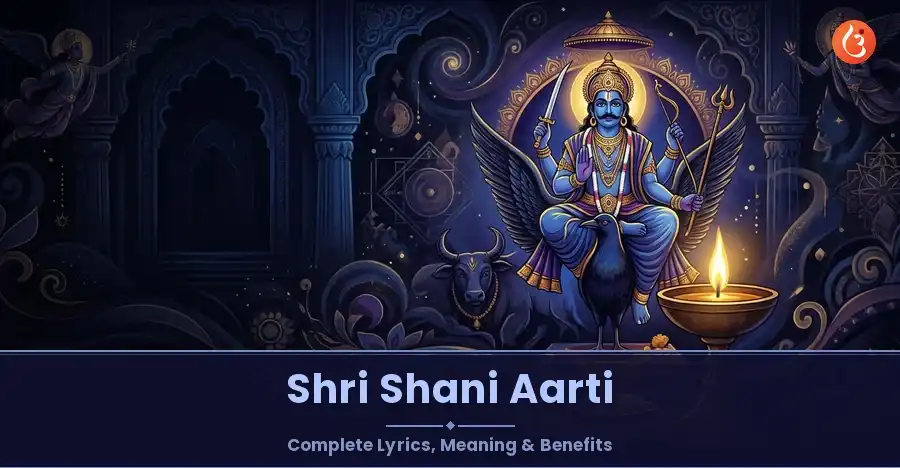
Verse 2: "Your form is dark, your gaze is askance, and you possess four arms. You are adorned in blue garments and ride upon an elephant (or sometimes a vulture)."
This describes his powerful and often intimidating iconography. The "askance gaze" (Vakra-Drishti) is particularly significant. It is not a sign of malice but of his impartial delivery of karma. Legends, such as those in the Brahma Vaivarta Purana, narrate how Shani's powerful gaze inadvertently caused harm even to Lord Ganesha's head, demonstrating that his influence is unavoidable and affects all beings. His mount is often a crow or vulture, birds associated with omens and the cycle of life and death, reinforcing his role as an overseer of cosmic consequences.
Verse 3: "A beautiful crown adorns your head, and your forehead shines brightly. A necklace of pearls beautifies your neck, making you look splendid."
Despite his stern reputation, this verse praises his divine, radiant form. It’s a reminder that justice, while firm, is also divine and beautiful.
Verse 4: "Modak (sweet dumplings) and other sweets are offered to you, along with betel leaves and nuts. Iron, sesame seeds, oil, and black gram are also your favorites, as is the she-buffalo."
This details the traditional offerings (samagri) that please Shani Dev. These items are astrologically linked to Saturn and are used in rituals to appease him. Each offering holds symbolic meaning. Iron (Loha) represents strength, resilience, and grounding—qualities that Saturn governs. Til (sesame seeds) and Tel (oil), especially mustard oil, are believed to absorb negative energies and pacify Shani's harsh effects. Offering these items is a symbolic gesture of surrendering one's ego and accepting life's lessons with humility.
Verse 5: "Gods, demons, sages, and all men and women meditate upon you. Even Lord Vishvanath (Shiva) meditates on you; we seek your refuge."
This is a powerful statement. It establishes Shani's universal significance, showing that even the highest deities respect his domain of cosmic law. When you chant this, you join a timeless chorus of seekers.
Why Should You Chant the Shani Aarti? (Key Benefits)
Reciting the Shani Aarti isn't just a ritual; it's a practice for spiritual alignment. Devotees at major temples like Shani Shingnapur chant it daily for tangible benefits. But why does it work?
Spiritual & Astrological Benefits
- Mitigates Sade Sati Effects: The most well-known benefit is seeking relief during the challenging seven-and-a-half-year period of Sade Sati. The aarti's vibrations are believed to pacify Saturn's harsh influence. You can learn more in our detailed guide to Shani Sade Sati and its remedies.
- Reduces Karmic Burdens: As the Karmaphal Daata, Shani Dev governs the results of our past actions. Chanting the aarti with a sincere heart is a way of asking for forgiveness and showing your commitment to a righteous path, which can ease karmic suffering.
- Instills Discipline and Patience: Saturn's energy is all about structure, discipline, and perseverance. Regular recitation helps you internalize these qualities, making you more resilient and focused in your daily life. It’s a powerful tool for self-improvement.
Practical Life Benefits
- Overcomes Obstacles: Shani's influence can often manifest as delays and obstacles. The aarti can help clear these blockages, whether they are in your career, relationships, or personal growth.
- Promotes Justice: If you are facing injustice or legal troubles, praying to Shani Dev can help ensure a fair outcome. He is the ultimate judge, after all.
- Enhances Mental Peace: By surrendering your anxieties about the future to Shani Dev, you can achieve a state of mental calm and acceptance. You trust that whatever happens is a result of a divine, just process.
How to Recite the Shani Aarti: The Complete Vidhi
To get the full benefit, you should follow the proper method (vidhi) as practiced by temple pandits. It’s simple, and you can easily do it at home.
- Preparation: Begin by taking a bath and wearing clean, dark-colored clothes (preferably black or dark blue). The dark colors are not merely for aesthetics; they are believed to be receptive to Shani Dev's cosmic energies, helping the devotee align with the planet's vibrations. Clean the space where you will perform the aarti.
- Setup: Place an image or idol of Shani Dev on a small altar, ideally facing the West direction, which is associated with him. Light a lamp (diya) with mustard oil (sarson ka tel). This is very important, as mustard oil is his favorite offering. Its use is rooted in Puranic stories where offering it helped relieve those under Shani's influence, symbolizing the soothing of harshness.
- Offerings: Offer blue or black flowers, black sesame seeds (kale til), and some prasad like black gram or a simple sweet.
- Invocation: Close your eyes and meditate on Lord Shani for a moment. Chant his seed mantra, "Om Sham Shanicharaya Namaha" (ॐ शं शनैश्चराय नमः), 11 times to invoke his presence.
- Recitation: Now, sing the Shani Aarti with full devotion, focusing on the meaning of the words. Maintain unwavering focus and avoid distractions. This focused devotion is key to connecting with the divine energy. You can ring a small bell while singing.
- Closing: After the aarti, bow down and ask for his blessings and forgiveness for any past misdeeds (kshama yachana). Distribute the prasad among your family members. The flowers and other non-edible offerings can be placed at the base of a Peepal tree the next day, a tree sacred to Shani Dev.
When Is the Best Time to Chant? (Auspicious Days 2026)
Timing is everything in Vedic rituals. While you can chant the Shani Aarti anytime you feel distressed, certain times amplify its power, according to Panchang calculations.
The best day of the week is Saturday, as it's ruled by Saturn. The most auspicious time is Pradosh Kaal, the twilight period lasting for about 90 minutes that straddles sunset. This time is sacred to Lord Shiva, Shani's guru, and chanting during this window is believed to yield the quickest and most powerful results.
Here are some key dates in 2026 when chanting the Shani Aarti is especially powerful:
Date | Event | Significance for Devotees |
|---|---|---|
Every Saturday | Shani-var | The weekly day dedicated to Lord Shani. Perfect for regular practice. |
Shani Jayanti | The birth anniversary of Lord Shani. This is the most important day of the year for his worship. | |
Monthly | Shani Pradosh Vrat | When a Pradosh Vrat falls on a Saturday, its power to please both Shiva and Shani is multiplied. |
Monthly | Shani Amavasya | When a New Moon (Amavasya) falls on a Saturday, it is a highly potent day for ancestral rites and seeking relief from deep-seated karmic issues. |
Shani Jayanti, celebrated on the Amavasya of the Jyeshtha month, marks his birth. On this day, the cosmic energies of Saturn are most accessible to devotees on Earth, making prayers and rituals exceptionally fruitful. For more details on auspicious timings, you can always refer to the Utsav Panchang.
Participate in Shani Puja on Utsav
While chanting the Aarti at home is powerful, participating in a formal puja conducted by verified pandits can provide deeper spiritual benefits. Utsav connects you with authentic rituals at major temples.
Recommended Pujas for Shani Dev:
- Laabh Drishti Dhan Akarshan Maha Anushthan & 23,000 Shani Mool Mantra Jaap Sahit Tel Abhishek: A comprehensive ritual for wealth attraction and mitigating Saturn's negative effects. Dakshina starts from ₹851.
- Shanivar Visesh Shani Graha Shanti Weekly Oil & Til Daan Seva: A simple yet effective weekly service to appease Lord Shani through offerings of oil and sesame. Dakshina starts from ₹151.
When you participate, pandits chant your name and gotra during the Sankalp, ensuring the blessings are directed to you. You receive a video of the puja and authentic prasad delivered to your home.
Scripture Composer/History
The Shani Dev Aarti, Jai Jai Shri Shanidev, is a traditional devotional hymn with no single attributed composer, placing it in the category of anonymous folk literature. It emerged from the Bhakti movement tradition, likely taking its present form in the medieval period. Composed in a vernacular Hindi dialect, its simple and direct language made the praise of Lord Shani accessible to all, unlike complex Sanskrit stotras. While its devotional themes are inspired by Puranic descriptions of Shani found in scriptures like the Skanda Purana, the aarti itself is a product of popular worship. It was transmitted orally for generations before being standardized in printed prayer books (pustikas) in the 19th and 20th centuries.
Sources & References
Scriptural Authority:
- The concepts of Shani's influence, Sade Sati, and karmic justice are detailed in foundational Jyotish texts like the Brihat Parashara Hora Shastra and Phaladeepika. The narrative and glories (Mahatmya) of Shani Dev are found in various Puranas, most notably the Skanda Purana and the Bhavishya Purana, which contain stories of his birth, his powers, and his interactions with other deities.
- The Aarti itself is part of the oral Bhakti tradition, a living stream of devotion passed down through generations.
Temple Verification:
- Ritual practices and the significance of offerings are verified against the traditions of major Shani temples, including the famous Shani Shingnapur temple in Maharashtra.
Related Pujas on Utsav:
- Shani Mool Mantra Jaap & Tel Abhishek
- Weekly Shani Oil & Til Daan Seva