Banke Bihari Aarti: Lyrics, Meaning & Vrindavan Temple Secrets
The Shree Banke Bihari Aarti (श्री बांके बिहारी आरती) is a devotional hymn dedicated to Lord Krishna in his unique form at the famous Vrindavan temple. It’s not just a song; it's an act of deep love and surrender, capturing the essence of devotion established by the great saint Swami Haridas. This aarti celebrates Krishna's playful, enchanting nature as the "Supreme Enjoyer" who is eternally "bent in three places."
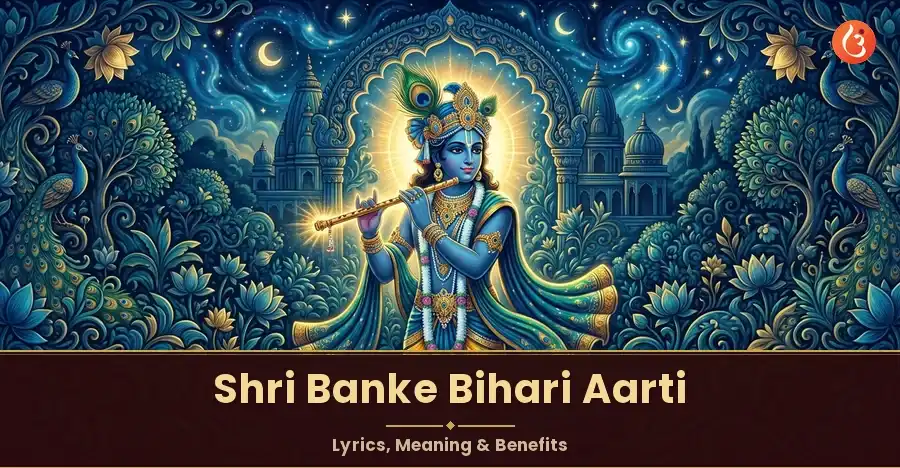
Quick Answer: Banke Bihari Aarti
- What: A devotional prayer celebrating Lord Krishna's form as Banke Bihari, the self-manifested deity of Vrindavan.
- Why: To express love, seek blessings for spiritual bliss, and connect with the divine play (leela) of Radha-Krishna.
- Who Revealed It: The deity was revealed through the intense devotion of Swami Haridas in Nidhivan, Vrindavan.
- Unique Tradition: The temple curtain is opened and closed every few minutes to prevent devotees from being completely mesmerized by the deity's powerful gaze.
Table of Contents
- The Story of Banke Bihari: Vrindavan's Divine Lord
- Shree Banke Bihari Aarti: Complete Lyrics in English
- Verse-by-Verse Meaning of the Banke Bihari Aarti
- What Are the Spiritual Benefits of This Aarti?
- How to Perform the Aarti: The Correct Vidhi
- Vrindavan's Unique Darshan: Temple Traditions You Must Know
- Sources & References
The Story of Banke Bihari: Vrindavan's Divine Lord
You can't fully appreciate the aarti without knowing its origin. The idol of Banke Bihari isn't man-made. According to the traditions established by Swami Haridas, the deity is a swayambhu (self-manifested) form of Radha-Krishna combined. The story goes that Swami Haridas, a master of the Dhrupad style of music and the guru of the famous musician Tansen, would lose himself in devotional songs within the sacred grove of Nidhivan. This was not mere performance; it was a profound spiritual practice (sadhana) where his music became a direct call to the divine. So intense was his devotion that the divine couple Radha-Krishna, unable to resist his love, appeared before him in their celestial form.
Overwhelmed by their beauty, Swami Haridas requested them to merge into a single, tangible form so that he and all devotees could worship them eternally. Granting his wish, they coalesced into the lustrous black stone idol we now know as Banke Bihari. This form is considered the very essence of their divine love and eternal play (Nitya Ras). The name itself tells a story: "Banke" means "bent in three places," describing Krishna's iconic Tribhanga posture, and "Bihari" means "the supreme enjoyer." It's a name that captures both his divine form and his playful spirit.
Shree Banke Bihari Aarti: Complete Lyrics in English
श्री बांके बिहारी तेरी आरती गाऊं ।
कुंज बिहारी तेरी आरती गाऊं ॥Shri Banke Bihari Teri Aarti Gaun,
Kunj Bihari Teri Aarti Gaun.
Stanza 1
Shri Banke Bihari Teri Aarti Gaun,
Kunj Bihari Teri Aarti Gaun.
Shri Shyamsundar Teri Aarti Gaun,
Shri Banke Bihari Teri Aarti Gaun.
Stanza 2
Mor Mukut Prabhu Shish Pe Sohe,
Pyari Banshi Mero Man Mohe.
Dekhi Chhavi Balihari Jau,
Shri Banke Bihari Teri Aarti Gaun.
Stanza 3
Charano Se Nikali Ganga Pyari,
Jisane Saari Dunia Taari.
Mai Un Charano Ke Darshan Pau,
Shri Banke Bihari Teri Aarti Gaun.
Stanza 4
Daas Anath Ke Nath Aap Ho,
Dukh Sukh Jeevan Pyare Saath Ho.
Hari Charano Mein Shish Navau,
Shri Banke Bihari Teri Aarti Gaun.
Stanza 5
Shri Hari Daas Ke Pyare Tum Ho,
Mere Mohan Jeevan Dhan Ho.
Dekhi Yugal Chhavi Bali-Bali Jau,
Shri Banke Bihari Teri Aarti Gaun.
Stanza 6
Aarti Gave Jo Koi Nar,
Jake Pure Manorath Ho.
Sang Saath Jamuna Ji Ko Dhau,
Shri Banke Bihari Teri Aarti Gaun.
Verse-by-Verse Meaning of the Banke Bihari Aarti
Understanding the words transforms the ritual from simple recitation to a heartfelt conversation. Here’s what each verse means.
Stanza 1: Invocation
"O Banke Bihari, I sing your Aarti. O Kunj Bihari (Enjoyer of the Groves), I sing your Aarti. O Shyamsundar (Beautiful Dark One), I sing your Aarti."
This opening is pure adoration, calling out to Krishna by his most beloved names associated with his Vrindavan leela. The name Kunj Bihari specifically invokes Krishna’s pastimes in the lush bowers (kunjas) of Vrindavan, where he would meet with Radha and the gopis. It is a deeply intimate name.
Stanza 2: The Divine Form
"A peacock-feather crown adorns your head, and your beloved flute enchants my mind. Seeing your divine image, I offer myself completely to you."
This verse paints a picture of Krishna's iconic form. The peacock crown and flute aren't just decorations; they are symbols of his divine charm and power to attract the soul. The peacock feather is symbolic of purity and beauty without ego, while the flute represents the divine call that draws the individual soul (Jivatma) back to the Supreme Soul (Paramatma).
Stanza 3: The Holy Feet
"The sacred Ganga flows from your feet, the very river that has saved the whole world. I wish to have a glimpse (darshan) of those holy feet."
This connects Banke Bihari to the supreme form of Vishnu, from whose feet the Ganga is said to originate. It’s a powerful statement of his divinity.
Stanza 4: The Ultimate Refuge
"You are the Lord of the helpless and orphaned. You are with me through all the joys and sorrows of life. I bow my head at your divine feet."
This is a declaration of absolute faith. It acknowledges Krishna as the ultimate protector who never abandons his devotees, a theme also central to the beautiful Gita Govinda Path.
Stanza 5: The Devotee's Treasure
"You are the beloved of Swami Haridas. My Mohan (Enchanter), you are the treasure of my life. Seeing your united form (with Radha), I offer myself to you again and again."
This verse directly honors the lineage of Swami Haridas and acknowledges the deity as the combined form of Radha-Krishna. The love for Radha is inseparable from Krishna, as beautifully expressed in the Radha Rani Aarti.
Stanza 6: The Fruit of Devotion (Phala Shruti)
"Whoever sings this Aarti, all their heartfelt desires are fulfilled. Along with this, I also praise Mother Yamuna."
This concluding verse states the benefit of the prayer, promising fulfillment for the sincere devotee and paying respect to the holy river Yamuna, the witness to all of Krishna's leelas in Vrindavan.
What Are the Spiritual Benefits of This Aarti?
Reciting this aarti is more than just a ritual; it's a powerful spiritual practice. According to Bhakti tradition, sincere recitation brings profound benefits.
- Deepens Devotion (Bhakti): The primary benefit is the cultivation of pure, unconditional love for Krishna (prema-bhakti). It melts the heart, washes away impurities like ego and anger, and fills it with divine bliss (ananda).
- Grants Inner Peace: The enchanting melody and profound meaning calm the mind, relieving stress and anxiety. It’s a direct path to mental tranquility.
- Removes Obstacles: Devotees believe that surrendering to Banke Bihari through this aarti helps clear spiritual and material obstacles from their path. He is, after all, the Nath (Lord) of the anath (helpless).
- Fulfills Righteous Desires (Manorath Siddhi): The final verse of the aarti itself contains a phala shruti (statement of benefits), promising that one who sings it with a pure heart will have their noble wishes fulfilled.
- Connects to Vrindavan's Energy: Singing it transports you mentally to the sacred groves of Vrindavan, allowing you to feel the divine presence of Radha-Krishna, much like a general Shree Krishna Aarti connects you to his universal form.
How to Perform the Aarti: The Correct Vidhi
To get the full spiritual effect, performing the aarti correctly matters. It doesn't have to be complicated. Sincerity is the key.
- Preparation: Take a bath and wear clean clothes. Create a clean, peaceful space for your worship. Place an image or idol of Banke Bihari or Radha-Krishna before you. You can also offer fresh flowers or incense to create a sattvic atmosphere.
- Light the Lamp: Light a ghee or camphor lamp. The light symbolizes the dispelling of darkness and ignorance. Camphor is especially potent as it burns completely without leaving a residue, symbolizing the burning of the ego.
- The Offering: Hold the lamp in your right hand and wave it in a circular, clockwise motion in front of the deity. The clockwise motion represents the auspicious path of cosmic energy. A simple pattern is to circle the feet four times, the navel twice, the face once, and then the entire form seven times.
- Sing with Feeling: Sing the aarti with devotion. Don't rush. Feel the meaning of the words as you sing. Your emotion is the real offering.
- Conclusion: After the aarti, cup your hands over the flame (carefully!) and bring them to your eyes and the top of your head to receive the divine energy and blessings. Distribute any prasad you may have offered. It is also customary to chant "Jai Banke Bihari Lal Ki Jai!" with devotion.
The best times are typically in the morning and evening, but any time you feel the call of devotion is the right time. For specific auspicious timings, you can always check the daily Utsav Panchang.
Vrindavan's Unique Darshan: Temple Traditions You Must Know
The Banke Bihari Mandir in Vrindavan has traditions you won't find anywhere else. These aren't just rules; they are part of the leela.
- Jhankidarshan (Curtain Darshan): This is the most famous tradition. The curtain before the deity is drawn open and shut every few minutes. Why? The temple priests explain that the gaze of Banke Bihari is so intensely captivating that if a devotee stares too long, they can be mesmerized and lose all self-awareness. It's a way to manage the overwhelming divine energy.
- No Bells: You won't hear any bells ringing in the temple. Banke Bihari is worshipped in his child form (Balak Roop). The belief is that loud bells would startle him or wake him from his slumber. All sevas (services), from waking him to putting him to sleep, are performed with the gentle care and affection one would show a beloved divine child.
- Elaborate Shringaar: The deity's adornment (shringaar) is a sight to behold and changes twice daily. The priests adorn him with exquisite clothes, jewels, and fresh flower garlands, treating him not as an idol but as a living prince of Vrindavan. The choice of dress and color often corresponds to the season, festival, or time of day.
- Mangala Aarti Once a Year: The early morning Mangala Aarti, a common practice in other temples, is performed here only once a year on Krishna Janmashtami. On all other days, the Lord is not woken up so early.
- Darshan of the Feet: The divine feet of the deity are shown to the public only once a year, on the auspicious day of Akshaya Tritiya. It is believed that darshan of his lotus feet on this day can grant liberation and fulfill all desires.
These traditions make the experience of visiting the temple and performing the aarti truly unique, connecting devotees to a living, breathing form of divine play.
Scripture Composer/History
The Shree Banke Bihari Aarti is a traditional devotional hymn whose specific composer is not formally documented, placing it within the rich legacy of anonymous Bhakti poetry. Its spiritual origins, however, are unequivocally linked to the 16th-century saint and musician Swami Haridas, the founder of the Haridasi Sampradaya. Composed in Brajbhasha, the vernacular dialect of Lord Krishna's own land of Vrindavan, the aarti is an expression of the intimate and ecstatic devotion central to this tradition.
The hymn's lineage is affirmed within its own verses, such as:
श्री हरि दास के प्यारे तुम हो
Shri Hari Daas Ke Pyare Tum Ho
(You are the beloved of Shri Haridas)
This line directly credits Swami Haridas as the spiritual progenitor through whom Lord Banke Bihari was revealed. The aarti has been transmitted through generations of priests and devotees, primarily through oral tradition, and remains a central part of the living worship at the temple in Vrindavan.
Sources & References
- Scriptural Authority: The leela of Banke Bihari is rooted in the oral and written traditions of the Haridasi Sampradaya, which follows the devotional principles of the Nimbarka Sampradaya.
- Temple Tradition: The unique practices like Jhankidarshan and the absence of bells are preserved and explained by the Goswamis of the Banke Bihari Mandir, Vrindavan.
- Historical Context: The life of Swami Haridas (16th century) is documented in various Bhakti movement texts and hagiographies.