Narsingh Aarti: Lyrics, Meaning & The Story of Divine Protection
The Narsingh Kunwar Aarti (नरसिंह कुंवर आरती) is a powerful devotional hymn sung to honor Lord Narasimha, the fierce man-lion avatar of Lord Vishnu. The term "Kunwar" translates to "prince" or "youthful one," highlighting the dynamic and heroic aspect of the Lord in this form. This aarti isn't just a song; it's an invocation for divine protection against evil, injustice, and all forms of negativity. According to the Bhagavata Purana, Lord Narasimha manifested specifically to protect his devotee Prahlada, demonstrating that divine help always reaches those with unwavering faith and pure hearts.
TL;DR: The Narsingh Kunwar Aarti is a hymn celebrating Lord Vishnu's Narasimha avatar, who appeared to protect his devotee Prahlada from the demon king Hiranyakashipu. Chanting it invokes divine protection, courage, and righteousness. The primary occasion for its recitation is Narasimha Jayanti, which falls on May 1st, 2026.
Table of Contents
- The Legend of Lord Narasimha: Why This Aarti Exists
- Narsingh Kunwar Aarti: Complete Lyrics in English
- Verse-by-Verse Meaning of the Aarti
- What Are the Benefits of Chanting Narsingh Aarti?
- How to Recite the Aarti for Maximum Blessings (Vidhi)
- When Should You Chant This Aarti? (Auspicious Timings)
- Participate in Narasimha Pujas on Utsav
- Sources & References
The Legend of Lord Narasimha: Why This Aarti Exists
Why does this Aarti hold such immense power? The answer lies in one of the most compelling stories of dharma and devotion, detailed in the seventh canto of the Srimad Bhagavatam. The demon king Hiranyakashipu, through intense penance, had secured a boon from Brahma that made him nearly invincible. He couldn't be killed by man or beast, inside or outside, during the day or night, on land or in the sky, or by any weapon. This intricate boon was his shield against all conceivable threats.
His arrogance grew boundless, and he demanded everyone worship him as God. But his own son, Prahlada, was a devoted follower of Lord Vishnu. This enraged Hiranyakashipu, who subjected his son to unspeakable tortures. Prahlada was thrown from cliffs, trampled by elephants, thrown into fires, and bitten by venomous snakes, yet he emerged unscathed from every ordeal. His faith never wavered. He just kept chanting Vishnu's name, seeing his Lord in the very instruments of his torture.
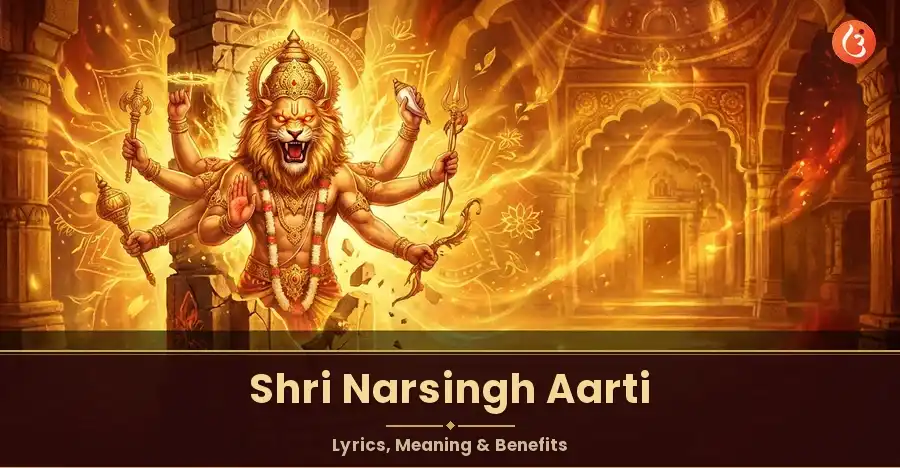
Finally, in a fit of rage, Hiranyakashipu pointed to a palace pillar and mockingly asked Prahlada if his all-pervading Vishnu was present there. The pillar was a symbol of the mundane, the inanimate, and the demon king believed it was the ultimate proof of God's absence. Prahlada affirmed with complete conviction, "Yes, He is everywhere." Hiranyakashipu shattered the pillar with his mace, and from it emerged the terrifying and magnificent form of Lord Narasimha—neither fully man nor fully beast. He seized the demon king at twilight (neither day nor night), at the threshold of the palace (neither inside nor outside), placed him on his lap (neither land nor sky), and used his sharp claws (no conventional weapon) to end the reign of terror. This story is the foundation of the Aarti's power, a testament to God's ability to protect faith in the most impossible circumstances.
Narsingh Kunwar Aarti: Complete Lyrics in English
This Aarti is a direct call to that protective, divine energy. Verified pandits recite it with specific intonations to invoke the Lord's presence. The term "Kunwar" (Prince) endears the otherwise ferocious form of the Lord, making Him approachable to the devotee as a heroic savior. While the version below is widely popular, minor regional variations in wording may exist, though the core sentiment of praise and surrender remains universal.
Stanza 1
Jai Narsingh Kunwar, Jai Narsingh Kunwar
Aarti Narsingh Kunwar ki
Bhaktan Ke Rakshak, Bhaktan Ke Palanhar
Dukh Haro, Sankat Nivaran Kar
Stanza 2
Jai Narsingh Kunwar, Jai Narsingh Kunwar
Aarti Narsingh Kunwar ki
Bhakto Ke Dukh Harne Wale
Bhav Sagar Se Tarne Wale
Stanza 3
Jai Narsingh Kunwar, Jai Narsingh Kunwar
Aarti Narsingh Kunwar ki
Bhakti Bhav Se Tujhe Pukare
Tere Darshan Ko Sabhi Pyaase
Verse-by-Verse Meaning of the Aarti
Understanding the words transforms recitation into a heartfelt conversation with the divine. It's not just about sound; it's about feeling the essence of each line and connecting it to the Lord's divine play.
Stanza 1 Meaning:
"Victory to Lord Narsingh, victory to Lord Narsingh! This is the aarti of Lord Narsingh. You are the protector (Rakshak) and sustainer (Palanhar) of devotees. Please remove our sorrows and resolve our crises."
This opening directly acknowledges His primary role. "Rakshak" refers to His immediate intervention against threats, just as He protected Prahlada from physical harm. "Palanhar" points to His broader role as the sustainer of the universe, a core attribute of Lord Vishnu, ensuring that righteousness and devotion are always preserved.
Stanza 2 Meaning:
"Victory to Lord Narsingh, victory to Lord Narsingh! This is the aarti of Lord Narsingh. You are the one who removes the pain of devotees and helps them cross the ocean of worldly existence (Bhav Sagar)."
This stanza connects His protective power to the larger spiritual goal of moksha. The "Bhav Sagar" is the tumultuous ocean of samsara—the endless cycle of birth, death, and rebirth, filled with suffering and attachment. By calling on Lord Narasimha, the devotee seeks not just temporary relief from worldly problems but ultimate liberation from this cycle itself.
Stanza 3 Meaning:
"Victory to Lord Narsingh, victory to Lord Narsingh! This is the aarti of Lord Narsingh. With deep devotion (Bhakti Bhav), we call out to you. Everyone is thirsty for a glimpse of your divine form (darshan)."
This expresses the devotee's deep yearning. "Bhakti Bhav" is the pure, unconditional love that Prahlada embodied. "Darshan" is not merely seeing; it is a profound spiritual experience of being in the divine presence, where the devotee beholds the deity and is, in turn, seen and blessed by them. This thirst for darshan is the highest aspiration of a devotee.
What Are the Benefits of Chanting Narsingh Aarti?
Reciting this aarti, especially with an understanding of its origin, brings profound spiritual and practical benefits. It's more than just a ritual; it's a spiritual shield that aligns you with divine grace.
- Ultimate Protection: The primary benefit, as described in various Puranas, is invoking a shield against negativity, enemies, and evil forces. This includes protection from hidden adversaries, black magic, and negative planetary influences (graha dosha). It’s a direct call to the ultimate protector.
- Instills Fearlessness: Meditating on Lord Narasimha's fierce form and protective nature grants immense courage. It removes phobias, anxieties, and the fear of failure, allowing you to face life's toughest challenges with a calm and confident mind. You feel divinely supported.
- Removes Obstacles: It's believed to clear legal disputes, resolve long-standing conflicts, and remove hurdles that seem insurmountable. Lord Narasimha's energy cuts through illusions and injustice, paving a clear path forward.
- Deepens Devotion: Regularly chanting the aarti purifies the mind of negative thoughts and strengthens your connection to Lord Vishnu. It fosters a deep sense of faith and surrender (sharanagati), which is the key to receiving divine grace.
- Promotes Health and Well-being: In many traditions, Lord Narasimha is worshipped as a divine healer (Vaidya Narasimha). Chanting his aarti is believed to offer relief from chronic and acute illnesses, especially those that are difficult to diagnose or treat.
How to Recite the Aarti for Maximum Blessings (Vidhi)
For the best results, follow the traditional vidhi (method) as prescribed by temple pandits. The right atmosphere and intention enhance the connection and amplify the hymn's power.
- Preparation: Begin by taking a bath and wearing clean, fresh clothes (preferably yellow or red). Create a sacred space by purifying it with a sprinkle of Gangajal. Place an image or idol of Lord Narasimha on a clean altar, facing East or North. Sit on a clean asana (mat) made of wool or kush grass. Light a ghee or oil lamp and an incense stick.
- Sankalpa (Intention): Before starting, close your eyes, join your palms, and state your intention (sankalpa). This could be a prayer for protection, the resolution of a problem, or simply an offering of pure devotion.
- Timing: The most powerful time to chant this aarti is during sandhya kaal (twilight), the sacred junction between day and night when Lord Narasimha appeared. This liminal period is considered spiritually charged.
- Offering: Offer simple prasad like jaggery with gram (gur-chana) or panakam (a traditional drink made of jaggery, water, and cardamom), which is a favorite offering at Narasimha temples. You can also offer fresh fruits and red flowers like hibiscus or tulsi leaves.
- Recitation: Sing the aarti with a clear, devoted voice. Focus on the meaning of the words and visualize Lord Narasimha's powerful yet compassionate form. Use a small bell or clap your hands rhythmically to maintain focus and create positive vibrations.
- Closing: After the aarti, cup your hands over the lamp's flame, and then gently touch your palms to your eyes and the top of your head. This act symbolizes receiving the divine light and wisdom of the Lord. Sit in silence for a few minutes, meditate on His form, and feel His protective energy enveloping you. Finally, distribute the prasad to family members.
When Should You Chant This Aarti? (Auspicious Timings)
While you can chant this aarti daily, especially during your evening prayers, certain days and times amplify its power. According to the Vaishnava Panchang, these timings are especially potent for connecting with Lord Narasimha's energy.
The most important festival is Narasimha Jayanti, celebrated on the 14th day of the bright half (Shukla Paksha) of the Vaishakha month. In 2026, this falls on May 1st. On this day, devotees often fast until dusk and perform the puja and aarti at the exact time of the Lord's manifestation. Chanting the aarti on this day is considered exceptionally auspicious.
Other powerful occasions include:
* Saturdays: In Jyotish (Vedic astrology), Lord Narasimha is a powerful deity whose worship can pacify the malefic effects of Shani (Saturn). Chanting his aarti on Saturdays is believed to mitigate hardships caused by difficult planetary transits.
* Swati Nakshatra: This is the birth star of Lord Narasimha. Worshipping Him when the Moon transits this nakshatra (constellation) is highly effective. Swati is ruled by Vayu, the wind god, and represents power, independence, and swift action—all qualities of Lord Narasimha.
* Pradosha Kalam: The twilight period, roughly 1.5 hours before and after sunset, is a spiritually charged time. Chanting the Narsingh Aarti during this window on any day aligns with the time of His avatar and is very powerful.
* During any period of fear or distress: You can chant it anytime you feel threatened, anxious, or in need of divine protection and courage. The Lord's grace is always available to a sincere devotee.
Participate in Narasimha Pujas on Utsav
For devotees who wish to deepen their connection, participating in a formal puja conducted by verified pandits can be a life-changing experience. Utsav offers specialized Narasimha pujas performed at authentic temples, allowing you to receive blessings from sacred sites.
Recommended Pujas:
* 7100 Narsimha Beej Mantra Jaap & 108 Maha Kavach Hawan: A powerful ritual for fulfilling desires and creating a shield of protection. The hawan (fire ceremony) purifies the environment and sends prayers to the divine realm. Dakshina starts from ₹851.
* Guruvar Visesh Narsingha Weekly Panakam Daan Seva: Participate in the traditional offering of Panakam to Lord Narasimha at the sacred Narsingha Mandir in Haridwar.
When you participate, pandits chant your name and gotra during the Sankalp, a crucial ritual that personalizes the puja and directs its blessings specifically to you and your family. You receive a video of the puja and authentic prasad delivered to your home.
Scripture Composer/History
The Narsingh Kunwar Aarti is a traditional folk devotional hymn (bhajan) and does not have a single, historically attributed composer, placing it in the same category as many popular aartis like the Shiv Chalisa. It is a product of the rich, anonymous Bhakti folk tradition of North India. Its language is simple, vernacular Hindi, designed for accessibility and direct emotional expression, rather than the classical Sanskrit of the Puranas. While its core narrative is drawn directly from the seventh canto of the Srimad Bhagavatam, which details the story of Prahlada and Narasimha, the aarti itself is a later composition. It has been transmitted orally for generations through family and community worship practices, eventually being transcribed in prayer booklets (pustikas) and now shared digitally.
Sources & References
Scriptural Authority:
* Srimad Bhagavatam (Canto 7, Chapters 8-10) - The definitive account of the Prahlada-Narasimha legend.
* Vishnu Purana - Corroborates the story of Vishnu's avatars.
Temple Verification:
* Rituals and vidhi cross-referenced with practices at Narsingha Mandir, Haridwar.
Panchang & Dates:
* Vedic Panchang calculations for Narasimha Jayanti 2026.
Related Gyan on Utsav:
* Learn about another divine incarnation in our guide to Balarama Jayanti.
* Explore the stories of other figures in our article on the Lesser Known Characters Of Ramayana.